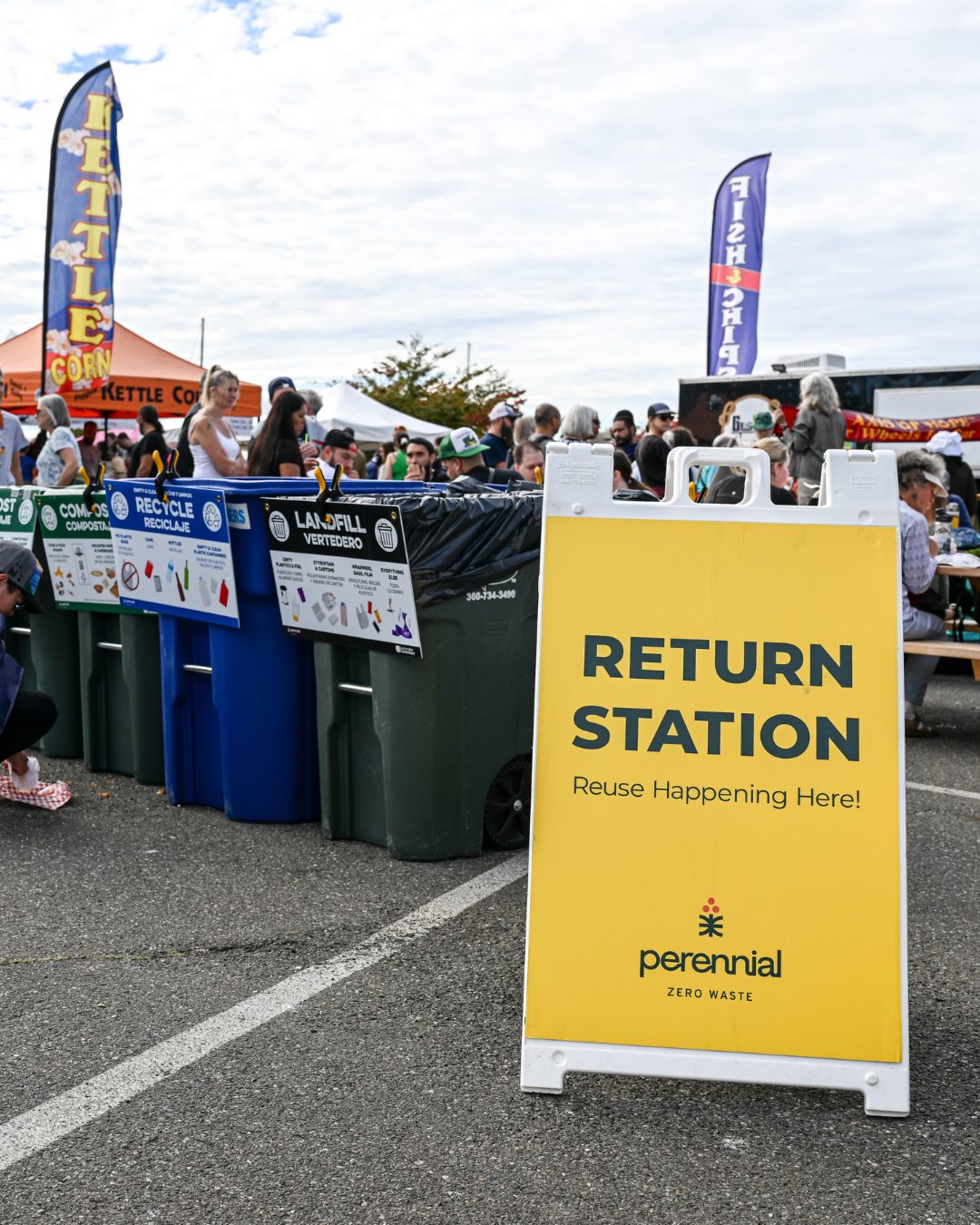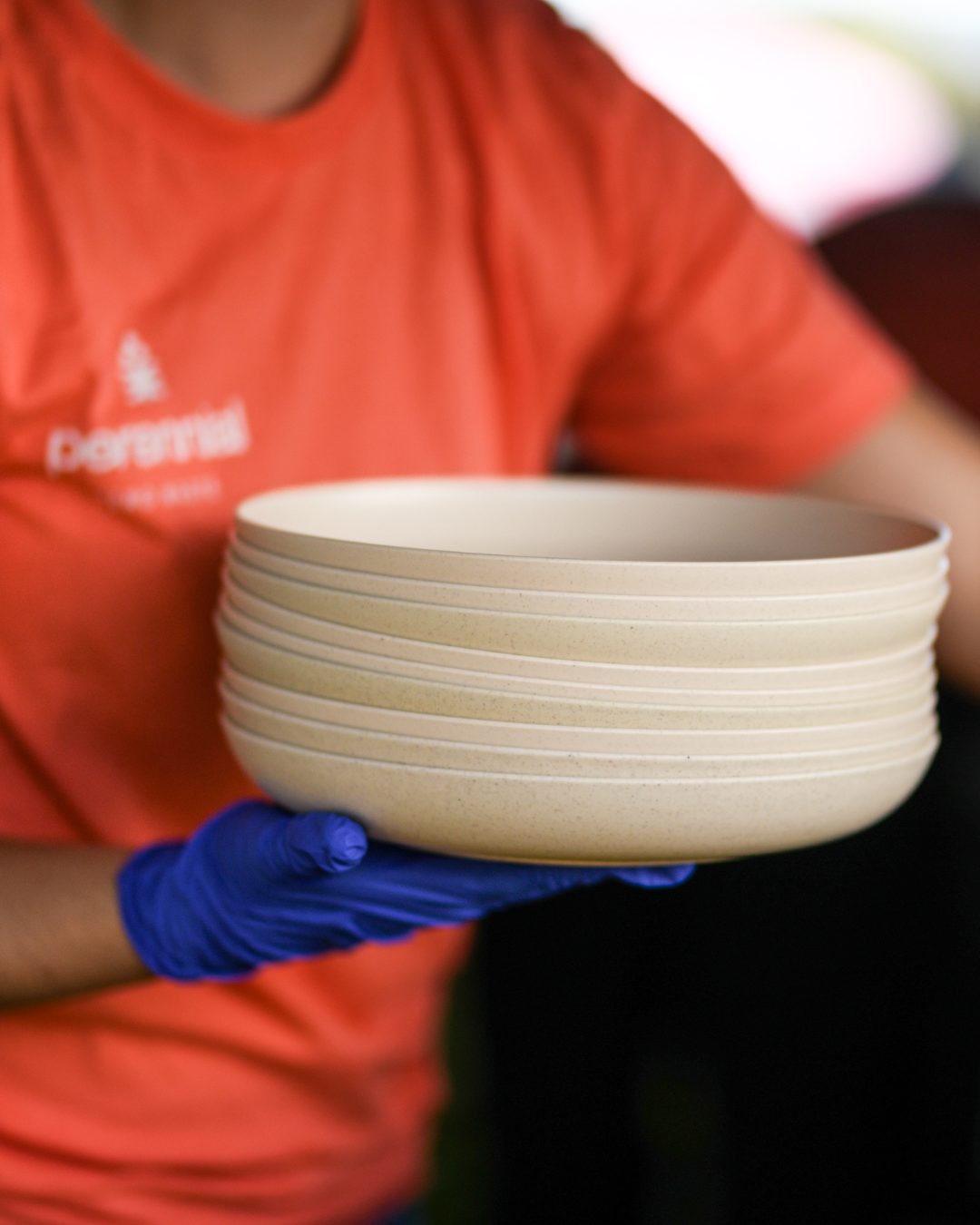
SeaFeast, a maritime festival held in Bellingham, WA, embraced a zero-waste model by introducing reusable dishware for food and drink vendors to help reduce environmental impact and promote sustainable event practices. Supported by a grant from Whatcom County Health and Community Services, SeaFeast partnered with Sustainable Connections and Perennial Zero Waste to implement this project. Together, these partnerships allowed SeaFeast to lead by example, demonstrating how events can successfully integrate zero-waste strategies and promote environmental stewardship.
The Reusable Dishware System
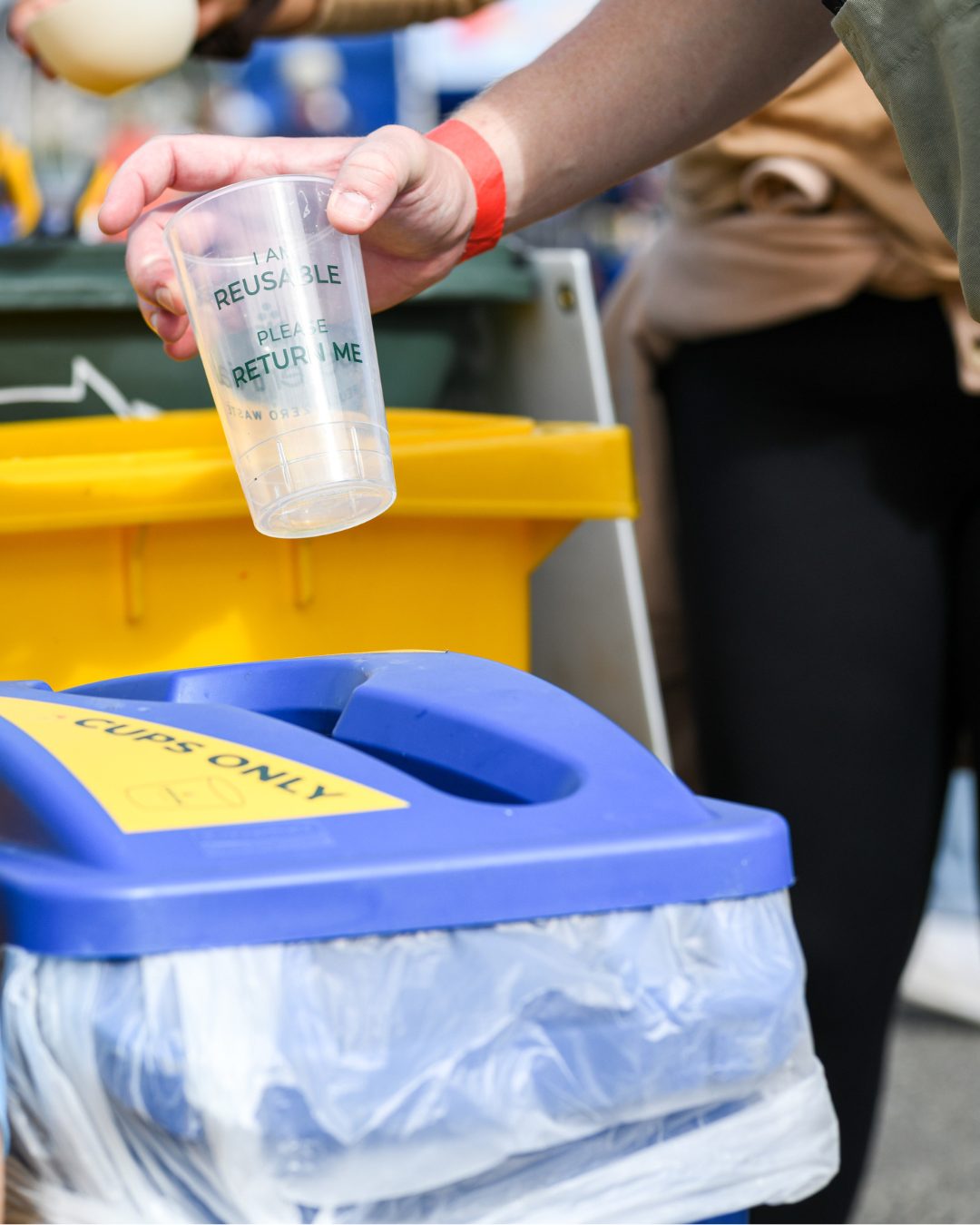
While there were many logistics to coordinate, the process was quite simple. Vendors were asked to complete a form requesting the types of dishware and quantities they anticipated needing for an event of this size. At the start of the festival, each vendor was stocked with a portion of their requested items. Customers ordered their food and, when finished, placed used reusable dishware into return bins located next to waste stations. Staff were stationed at waste stations to help guide items into the proper waste stream or dishware bins and served as an important point of education. Staff collected items from the return bins, washed them in the mobile dishwashing unit, and redistributed clean dishware to vendors as needed, completing the cycle.

Environmental and Economic Outcomes
This reusable dishware system eliminated an estimated 30,635 single-use items, which removed approximately 798 pounds from waste streams. In total, 32 vendors requested dishware for the event. While participation varied, the majority of food vendors embraced the reusable dishware system. By using the provided reusable dishware, vendors saved an estimated $225 each in serviceware costs, totaling $7,200 in savings across the festival.
The Hidden Costs of Disposable Plastics
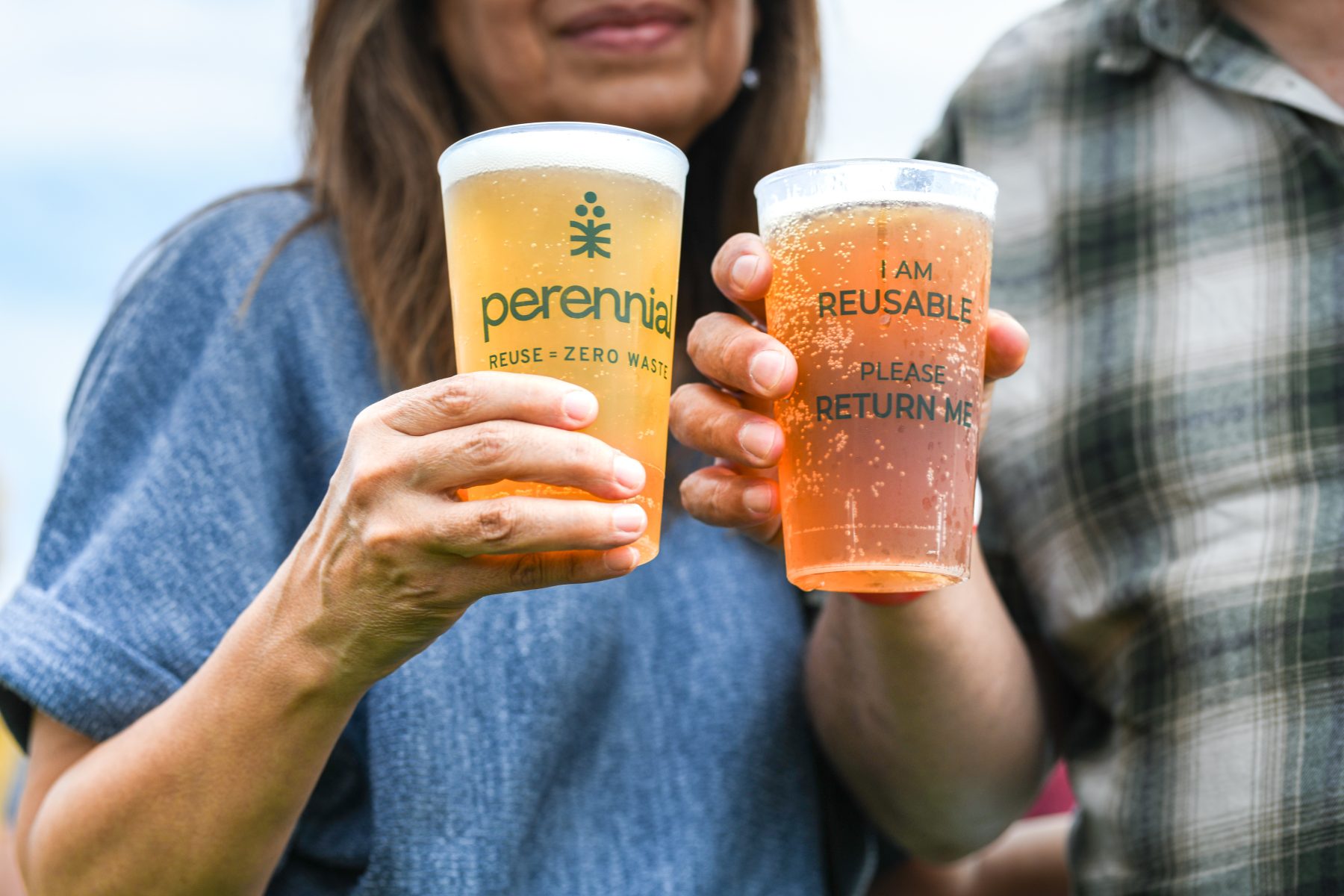
While plastics are often the cheapest option upfront, their long-term costs are far greater. After use, plastic serviceware is typically discarded into landfills, where it can take centuries to break down, contributing to the growing volume of waste. Plastic production is also highly carbon-intensive and a contributor to climate change. Perhaps most concerning, when plastic escapes the waste stream it will often enter our marine environments where it bioaccumulates harmful toxins throughout the food chain and ultimately makes its way back to humans.
A Better Way Forward
Reusable dishware not only provides clear environmental benefits, but also enhances the customer experience. Enjoying a meal with sturdy utensils and a firm tray elevates the experience, bringing it closer to the feel of a sit-down restaurant. Over 75% of survey participants rated the experience 5 out of 5, showing that customers truly value this initiative. As reusable systems become more familiar, participation and appreciation will continue to increase, setting a higher standard for customer experience and waste reduction at large events.