Personal tools
You are here: Home » Food and Farming » Food To Bank On » Resources for Beginning Farmers

Resources for Beginning Farmers

The Food & Farming Program is committed to increasing the number, diversity, prosperity and sustainability of local agricultural producers. We know that farming can be challenging and making a successful agricultural enterprise a reality requires a wide variety of skills. Listed below are local, regional and national resources (with live links - just click on them) for farmers that can get you in the loop on the local farming scene, educate you about best practices for our region, help you find land, access financing, and much more. You can jump to individual sections below by clicking on the table of contents, or browse through the whole list for a more comprehensive picture of what's available. 

Community

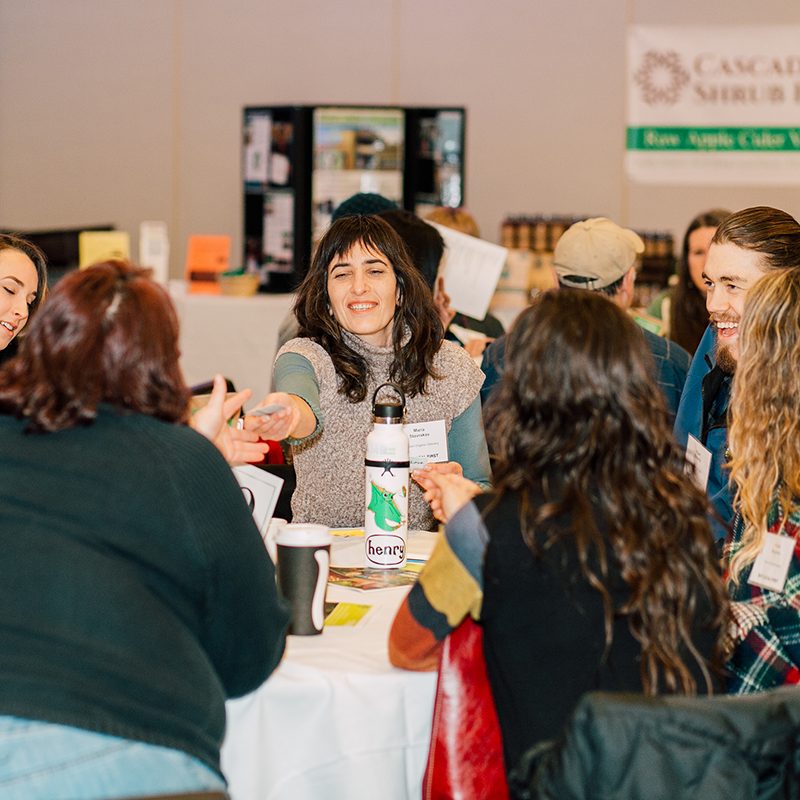
There are many local and regional avenues for getting connected to your fellow Whatcom County farmers. The groups and organizations listed below are a great starting point.

Farmer Training

Growing food is a specialized profession that requires knowledge of everything from soil science to equipment maintenance to marketing. These programs and resources can get you well on your way to becoming a master farmer.

Bridging the GAP (WSDA): The Bridging the GAPs project (2012-13) will provide information and support for those working on food safety planning and considering a GAP/GHP audit, specifically on smaller or more diversified farms.The WSDA team will provide training to help WSDA auditors better serve small and diversified farming operations, and coordinate workshops and tools for the farming community to share examples of safe growing practices that meet the GAP certification standards.

Washington State University Extension: The Whatcom County WSU Extension office is a wealth of knowledge about farming in our specific region and climate.

  • Sustainable Agriculture Weblinks - Resources for farmers seeking information on topics as varied as Integrated Pest Management, composting, raising livestock, irrigation and much more. This page also has links to national organizations and universities, many of which offer more in-depth tutorials, books and classes on an even wider range of topics.
  • Cultivating Success - This four-course series covers everything from sustainable farming and ranching to agricultural entrepreneurship to food systems – and is offered in a number of counties throughout WA State and Idaho. For a detailed list of available courses, click here.
  • Online Organic Agriculture Certificate Program - WSU’s online certificate in organic agriculture, the first in the nation, develops a solid background in the agricultural sciences, including an understanding of complex agriculture and food systems. Students develop knowledge and skills that are applicable to all industries and agencies involved in the food chain – from production, processing, and delivery to policy, regulation, and education.
  • Greenbank Farm Training Program - This project on Whidbey Island trains new farmers in small-scale organic agriculture through classroom education, field trips, and the hands-on operation of the 50-member Greenbank CSA.
  • Viva Farms, Skagit County - The Viva Farms Incubator Program was launched in June 2009 to provide new farmers affordable access to education, training and technical assistance; capital and credit; land and markets

    Cloud Mountain Farm Center -
    Six to eight month internships on this working farm in Everson offer aspiring farmers hands-on experiences in sustainable agricultural production and management, including marketing and sales. Interns join the staff 40 hours a week.

    Find a Mentor -
    There are both formal and informal ways to find a mentor. The Food To Bank On Program (FTBO) offers one way to meet with and learn from experienced farmers in Whatcom County. Many veteran farmers are excited about passing on their knowledge to the next generation of sustainable farmers. More informal mentoring can be found by seeking out farmers (both young and old) who seem like they know what they're doing and finding a way to make yourself useful.

    Get a job -
    There is no better way to learn how to farm than by getting out in the field and doing it. Looking for a farm job is much like looking for other sorts of jobs; research (finding places you'd like to work) and networking (aka meeting people and talking to them) will go a long way. The Whatcom Farmer's List Serve is a good place to start putting out the word that you're looking for on-farm work. For national and international resources for finding a farm job, look at page #8 of "The Greenhorns Guide for Beginning Farmers".


Business Planning

Sustainability isn't just about being green, it's also about making sure you can sustain yourself over the long haul. The more you know about how to run a successful business, the longer you can keep digging your hands in the dirt and feeding fresh healthy food to folks who need it. These resources exist to support you in learning the ins and outs of finding markets, tracking your finances, strategic planning and much, much more.

Local Organizations

  • Food to Bank On (FTBO) - A project of Sustainable Connections' Food & Farming program, FTBO offers beginning farmers peer-based business planning workshops, field days and payments for deliveries to partnering hunger relief agencies.
  • WSU: Cultivating Success: Agricultural Entrepreneurship - This in-depth business planning course covers evaluating resources, planning and research, legal and management issues, marketing strategies, budgets and financial statements and cultivating money resources.  Participants produce a completed business plan by completion of course.  Farmers and small business resource providers serve as guest speakers, bringing real world experience to the class.

  • Small Business Development Center (SBDC) - The SBDC's goal is to provide business-advising services – the vast majority of which are at NO COST to the  local entrepreneurs who are looking to grow their businesses, increase profitability, and create jobs. For information, contact: Jennifer Shelton, director, WWU College of Business and Economics Small Business Development Center, (360) 778-1762 or Jennifer.shelton@wwu.edu.

  • Northwest Agricultural Business Center (NABC) - NABC’s clients receive practical training in such areas as management of agricultural resources, development of a business plan, financial planning, quality control, development of marketing strategies, and building a strong brand.
  • Center for Economic Vitality (CEV) - The Center for Economic Vitality offers NO-COST, confidential business counseling to businesses in Whatcom County. Services provided include: Business plan development; Marketing plan development; Cost/Financial analysis; Access to capital, loan information and finance packaging; Market research and strategies; Labor and personnel issue solutions; Valuing a business for sale or purchase; Developing personnel policies; Strategic planning; Succession planning.

Online Resources

  • Building a Sustainable Business - Developed by the Minnesota Institute for Sustainable Agriculture, this workbook contains a variety of exercises to take you through the business planning process, step by step. Throughout the book real examples of farm families who have used the book's tools illustrate and enrich the activities. Each section is separately downloadable so you can pick and choose whichever pieces you want to use most.
  • AgPlan - An online software tool that helps rural business owners develop a business plan for free.
  • Beginning Farmer an Rancher Resources - Basic Bookkeeping, Budgeting, Tax Recordkeeping, other stuff By Poppy Davis, Executive Director at Ecological Farming Association.
  • Farm Business Records: An Introduction - This publication is part of the "Farming West of the Cascade" series written by Richard W. Carkner, Extension Economist.
  • Field Guide to the New American Foodshed - The New American Foodshed is a large and relatively unexplored territory of local and regional markets now opening up for farm, ranch, and related entrepreneurs. This site includes resources encompassing the new territory of local and regional food markets, case studies on successful businesses, planning tools and more.

Books

  • The Organic Farmer's Business Handbook, by Richard Wiswall - In this comprehensive business kit, Wiswall covers: Step-by-step procedures to make your crop production more efficient; Advice on managing employees, farm operations, and office systems; Novel marketing strategies; What to do with your profits: business spending, investing; and planning for retirement. A companion CD offers valuable business tools, including easy-to-use spreadsheets for projecting cash flow, a payroll calculator, comprehensive crop budgets for forty different crops, and tax planners.

Marketing

Getting to know your customer and making sure your customer knows about you are vitally important to running a successful farm business. Use the resources below to find out how and where to market the fruits of your labor.

  • Small Farm and Direct Marketing Handbook - This comprehensive guide, put out by the Washington State Department of Agriculture, is designed to help beginning, established and/or transitioning farmers understand the rules and regulations for direct marketing in WA State. Among other things, it contains detailed sections on direct marketing strategies and regulations for selling specific products directly to consumers. You can download the complete handbook online (available in sections), or contact them directly to receive a free paper copy. Much of the information on their website is also available in Spanish.
  • Online Marketing Tools - The Puget Sound Food Network and Food Hub are online trading platforms are designed to connect Northwest growers with buyers. For information on benefits and discounts available to Food & Farming Program members, contact Laura Ridenour, (lridenour@sconnect.org, 360.647.7093 ext 106).
  • Direct-Market Farm Products on the Internet - Here is a guide to selling produce online by the United States Department of Agriculture written by economist, Jennifer-Claire V. Klotz.
  • Community Food Coop - Our local food coop has been operating in Bellingham for 40 years and sells a wide variety of local products. Whether checking their shelves and doing some market research of your own, or contacting department managers directly to find out what their criteria for purchasing from local vendors is, the coop is a great resource for local producers.
  • USDA Ag Marketing Service - "The U.S. Department of Agriculture’s Agricultural Marketing Service administers programs that facilitate the efficient, fair marketing of U.S. agricultural products, including food, fiber, and specialty crops." Find information on their website on how to price your crops, Organic certificationFood Hub, and market research and tools specifically designed for small to mid-size producers. 
  • Food Hub - FoodHub is a West Coast online software that gathers professional food buyers, wholesale producers, distributors and industry suppliers in one dynamic community.

Licensing

Growing and selling food requires a certain amount of jumping through official hoops. Use the resource below to find out how to stay on the right side of the rules and regulations for producers in Whatcom County and WA State.


Financing

At some point you may need to purchase equipment, land, or improvements for your land that require a little (or a lot) of extra capital. Fear not! If you've done your business planning (see above sections) you should be able to access financing. Below are great sources of funding for farmers.

  • United States Department of Agriculture (USDA) - The USDA has recently compiled a list of grant programs available through various government agencies that are designed to support farmers and strengthen local food systems. Some grants may require you to partner with a 501c3 organization or research institutions.
  • Northwest Farm Credit Services - The Ag Vision Program helps young, beginning, small and minority producers access financing for land, equipment, and production expenses at competitive rates. 
  • Farm Service Agency (FSA) - The Whatcom County FSA office can walk you through the process of applying for a low-interest loan designed specifically for farmers who cannot access credit elsewhere. Click here for local contact information.
  • Rural Tax Education - Provide farmers and ranchers a resource for agricultural related income and self-employment tax information that is both up-to-date and easy to understand.
  • Washington State Department of Revenue - an online overview of taxes applying to farming in Washington State. 
  • Internal Revenue Service (IRS): Farmers Tax Guide  - A comprehensive guide to a variety of topics concerning assets, expenses, income, and much more.

Land

You can't farm without land and that's a fact. Some farmers choose to lease land while others buy or inherit their farms. Whichever path you decide to take, there are a few ways to find out how well-suited a parcel is for growing food. Other organizations listed here can help you find available land and make purchasing it possible.

  • Soils - The Web Soil Survey (WSS) is an online tool that can help you find out which soil types are on a particular parcel of farmland. The WSS will not tell you the nutrient content of your soil. For that information you'll have to get individual soil tests done. A NEW WSU Extension Manual on soil testing for diversified vegetable farms and gardens is now available.
  • Water - According to the WA State Department of Ecology, you must have a valid water right to use any water source (wells, springs, rivers, etc.) for crop irrigation. This means that whether there is water on your land or not, getting and keeping the legal right to use that water can be quite difficult.  For a guide to WA water rights and some suggestions on how to navigate them as a small-scale specialty crop grower, click here.
  • FarmLink - Washington FarmLink is the state’s leading program to link aspiring farmers and landowners. For more information, contact Alex Moore (alex@cascadeharvest.org).
  • Kulshan Community Land Trust (KulshanCLT) - KulshanCLT's Affordable Access to Land for Farming program is working to provide farmer's with long-term, stable and affordable access to land for farming through a variety of ways including working with farmers to bridge the difference between what they can afford and what farmland actually costs. For more information, contact Ann Russell (annrussell@kulshanclt.org, 360.671.5600).


Local Agricultural Policy Resources

The agricultural sector in Whatcom County has a long history and involves many stakeholders. From land use to water rights, policies that affect farmers are being created and debated all the time so it's important to know who makes what decisions and why. Listen, learn, and speak up!

  • Futurewise Whatcom - Futurewise Whatcom is the local chapter of statewide land-use advocacy organization, Futurewise, and works to promote healthy communities and cities while protecting working farms, working forests, and shorelines today and for future generations.
  • Farm Friends - Whatcom Farm Friend's mission is to preserve and enhance agriculture as an important industry and to be a good steward of our natural environment through policy management, advocacy, business improvement, education and outreach. Their website offers a variety of resources for producers regarding local agricultural policy.
  • Agricultural Advisory Commission (AAC) - The Whatcom County AAC provides review and recommendations to the Whatcom County Council on issues that affect agriculture.  The AAC also provides a forum for farmers and others interested in enhancing and promoting the long-term viability of Whatcom County agriculture. Visit their website for meeting minutes and contact information. 


General Resource Guides


  • National Sustainable Agriculture Information Service - The latest in sustainable agriculture and organic farming news, events and funding opportunities, the National Sustainable Agriculture Information Service - a project of National Center For Appropriate Technology (ATTRA) - covers these topics, plus offers in-depth publications on production practices, alternative crop and livestock enterprises, innovative marketing, organic certification, and highlights of local, regional, USDA and other federal sustainable agriculture activities. ATTRA's publications are written by sustainable agriculture specialists, who are experts in their fields, and are meant to help farmers, ranchers and others involved in sustainable agriculture.
  • The Greenhorns Guide for Beginning Farmers - "This guidebook is written for young farmers by young farmers. It is meant to help you plan your professional trajectory into the field of sustainable agriculture. This is the Condensed Fourth Edition of the Greenhorns' Guide for Beginning Farmers, intended to briefly cover some of the major areas of institutional support for young farmers, likely venues of learning, and useful references." It also happens to be extremely well-written, fun to read (if you're at all into farms, farming and/or farmers) and has a more comprehensive list of resources. 


Document Actions
Information for:
Updates by Email
Please select the e-mail newsletters you would like to receive (each program generally sends one e-mail per month).

General SC Events
Food and Farming News
Green Building Smart Growth News
Volunteer Opportunities
Privacy Policy
Find us on Facebook
 
powered by Plone | site by Groundwire | design by DoubleMRanch